

ঢাকা    বুধবার, ১২ আগস্ট ২০২৬, ২৮ শ্রাবণ ১৪৩৩
The Campus Times online

Not long ago, staying connected meant something simple and deeply human

The Digital Silence That Is Changing the Way We Really Connect


The Digital Silence That Is Changing the Way We Really Connect

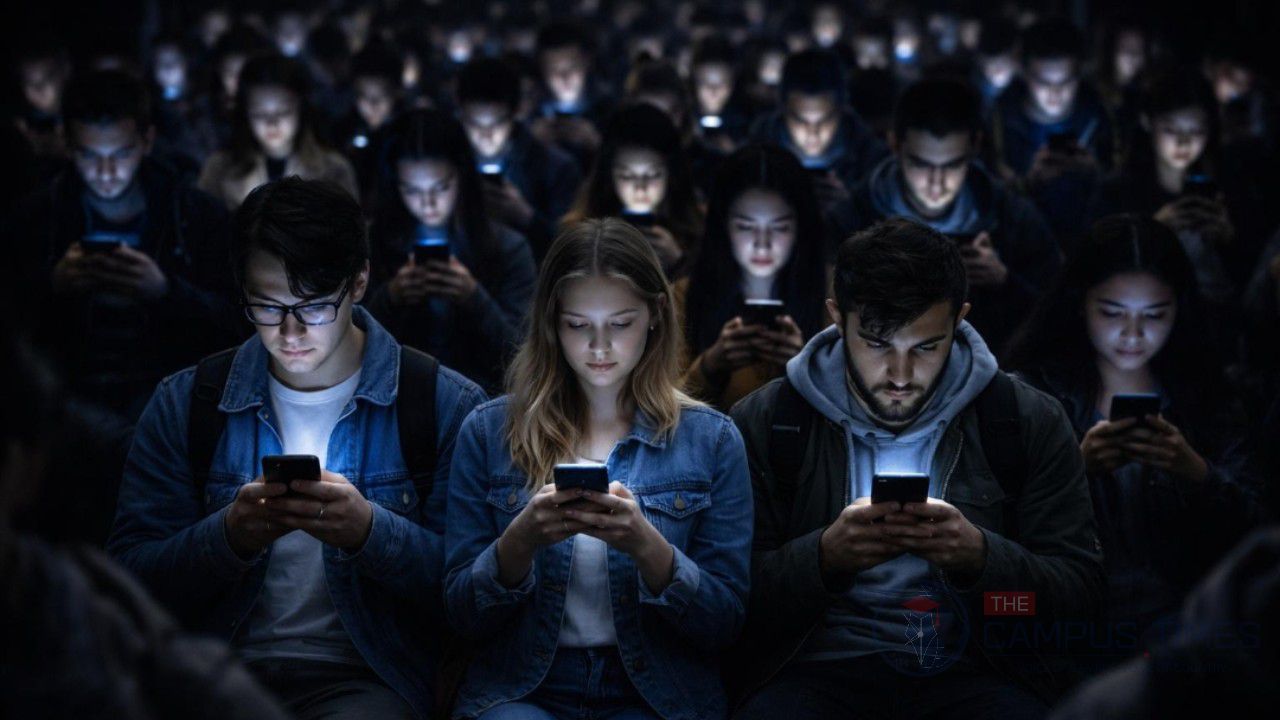
Not long ago, staying connected meant something simple and deeply human. I still remember my grandmother sitting on our veranda every evening waiting for the muezzin's call before dinner — no phone in her hand, just the sound of my uncles arguing about cricket and my mother laughing in the kitchen. Nobody checked a screen. Nobody needed it. The evening itself was the connection.Today, our lives revolve around smartphones, relentless notifications, and social platforms that promise to keep us close every second of the day. We can send a message across the globe in milliseconds or start a video call with a single tap. On the surface, it feels as though humanity has never been more connected than it is right now. And yet, walk into any café on a Friday evening and you'll see the paradox play out. Two friends sit across from each other, phones face-up on the table, thumbs moving faster than their lips. The room is full of people, yet it feels strangely quiet. This is digital silence: a world where we are more "connected" than any generation before us, yet somehow talking to each other less. However,beneath all this constant digital chatter lies a quiet distance that many of us struggle to name. It is not the peaceful silence of an empty room, but an artificial stillness — the kind that settles in when eye contact grows rare, conversations shrink into short texts, and real human presence gives way to endless scrolling. We are typing more than ever, yet listening far less, understanding far less, and feeling, somehow, far more alone. Social media platforms like Instagram, Facebook, TikTok, and X have completely transformed how we build and maintain relationships. Birthdays are now remembered through automated phone reminders, major life updates are shared through temporary stories, and complex emotions are compressed into simple emojis. These tools make communication fast and effortless, but they have also quietly hollowed out the emotional depth of our interactions. Most conversations stay brief and surface-level, leaving little room for empathy, patience, or real dialogue. This shift isn't just a feeling; it's backed by growing evidence. Recent psychological research links heavy social media use to rising social isolation and anxiety, particularly among young adults. When the brain gets used to quick dopamine hits from likes and comments, slower, more thoughtful conversation starts to feel like effort. Many people begin withdrawing from face-to-face interaction without even noticing. They seek comfort in screens, only to end up feeling more disconnected than before. I saw this play out firsthand a few weeks ago at a popular campus hangout. Four close friends sat together at a small corner table, each having traveled from a different part of the city just to meet up. For nearly an hour, hardly a word passed between them. Everyone was hunched over their own glowing screen, laughing at short video clips, replying to people who weren't even there. They were physically inches apart and emotionally miles away. It was a quiet, striking reminder of how easily technology can fake togetherness while draining the real thing out from underneath it. For the younger generation, being online isn't a habit. It's the environment they grew up in. Checking notifications is often the first thing they do after waking up, and the last before falling asleep. But that non-stop connectivity comes with an invisible cost: a constant, low-grade pressure to always be available. A delayed reply can read as coldness or rejection. A post that gets fewer likes than expected can quietly chip away at someone's confidence. This is one of the sharpest paradoxes of our time. A person can have thousands of followers and still feel profoundly alone. Popularity on a screen doesn't translate into emotional security, and hundreds of virtual friends don't guarantee a single person to call when life actually gets hard. Millions of people spend hours a day engaging with screens while having almost no real conversation with the person sitting right beside them. None of this means the technology itself is the villain. Social media has reunited families separated across continents, given students access to world-class knowledge, powered social justice movements, and opened up opportunities that simply didn't exist before. In moments of crisis, digital tools have kept entire communities functioning when in-person gathering wasn't possible. Those gains are real, and worth holding onto. The real question is how we use these tools. When online messages start replacing face-to-face conversation entirely, relationships lose warmth and trust over time. People need understanding, empathy, and a sense of belonging, needs that a stream of likes and short comments simply cannot meet. Real connection takes time, focused attention, and genuine presence, none of which a notification can substitute for. Fixing this doesn't mean giving up our phones. It starts with small, intentional choices: putting the phone face-down during meals, choosing tea with a friend over a quick voice note, practicing the discipline of listening without half a mind on a screen. Choosing quality interaction over passive scrolling is how we become present in our own lives again. As technologies like artificial intelligence and virtual reality keep advancing, it's worth asking a harder question. Are we building richer communication, or just generating more digital noise? Progress shouldn't be measured by internet speeds or smarter algorithms alone, but by the strength of our relationships, the health of our communities, and our collective emotional well-being. The real test for this generation isn't learning how to stay connected online. It's remembering how to connect as human beings. Behind every screen is a person who wants to be understood, valued, and heard. If we let digital convenience replace real human presence, we risk losing the very thing that was supposed to bring us together in the first place.Technology was created to connect people. Its greatest success will not be measured by how long we stay online, but by how deeply we remain connected to one another. 

 About the author 

 Sumaiya Binte Sarwar 

Student, Department of Sociology, University of Dhaka 
বিষয় : Article Dhaka University

The Campus Times online

বুধবার, ১২ আগস্ট ২০২৬


The Digital Silence That Is Changing the Way We Really Connect

প্রকাশের তারিখ : ১২ আগস্ট ২০২৬

featured Image

Not long ago, staying connected meant something simple and deeply human. I still remember my grandmother sitting on our veranda every evening waiting for the muezzin's call before dinner — no phone in her hand, just the sound of my uncles arguing about cricket and my mother laughing in the kitchen. Nobody checked a screen. Nobody needed it. The evening itself was the connection.Today, our lives revolve around smartphones, relentless notifications, and social platforms that promise to keep us close every second of the day. We can send a message across the globe in milliseconds or start a video call with a single tap. On the surface, it feels as though humanity has never been more connected than it is right now. And yet, walk into any café on a Friday evening and you'll see the paradox play out. Two friends sit across from each other, phones face-up on the table, thumbs moving faster than their lips. The room is full of people, yet it feels strangely quiet. This is digital silence: a world where we are more "connected" than any generation before us, yet somehow talking to each other less. However,beneath all this constant digital chatter lies a quiet distance that many of us struggle to name. It is not the peaceful silence of an empty room, but an artificial stillness — the kind that settles in when eye contact grows rare, conversations shrink into short texts, and real human presence gives way to endless scrolling. We are typing more than ever, yet listening far less, understanding far less, and feeling, somehow, far more alone. Social media platforms like Instagram, Facebook, TikTok, and X have completely transformed how we build and maintain relationships. Birthdays are now remembered through automated phone reminders, major life updates are shared through temporary stories, and complex emotions are compressed into simple emojis. These tools make communication fast and effortless, but they have also quietly hollowed out the emotional depth of our interactions. Most conversations stay brief and surface-level, leaving little room for empathy, patience, or real dialogue. This shift isn't just a feeling; it's backed by growing evidence. Recent psychological research links heavy social media use to rising social isolation and anxiety, particularly among young adults. When the brain gets used to quick dopamine hits from likes and comments, slower, more thoughtful conversation starts to feel like effort. Many people begin withdrawing from face-to-face interaction without even noticing. They seek comfort in screens, only to end up feeling more disconnected than before. I saw this play out firsthand a few weeks ago at a popular campus hangout. Four close friends sat together at a small corner table, each having traveled from a different part of the city just to meet up. For nearly an hour, hardly a word passed between them. Everyone was hunched over their own glowing screen, laughing at short video clips, replying to people who weren't even there. They were physically inches apart and emotionally miles away. It was a quiet, striking reminder of how easily technology can fake togetherness while draining the real thing out from underneath it. For the younger generation, being online isn't a habit. It's the environment they grew up in. Checking notifications is often the first thing they do after waking up, and the last before falling asleep. But that non-stop connectivity comes with an invisible cost: a constant, low-grade pressure to always be available. A delayed reply can read as coldness or rejection. A post that gets fewer likes than expected can quietly chip away at someone's confidence. This is one of the sharpest paradoxes of our time. A person can have thousands of followers and still feel profoundly alone. Popularity on a screen doesn't translate into emotional security, and hundreds of virtual friends don't guarantee a single person to call when life actually gets hard. Millions of people spend hours a day engaging with screens while having almost no real conversation with the person sitting right beside them. None of this means the technology itself is the villain. Social media has reunited families separated across continents, given students access to world-class knowledge, powered social justice movements, and opened up opportunities that simply didn't exist before. In moments of crisis, digital tools have kept entire communities functioning when in-person gathering wasn't possible. Those gains are real, and worth holding onto. The real question is how we use these tools. When online messages start replacing face-to-face conversation entirely, relationships lose warmth and trust over time. People need understanding, empathy, and a sense of belonging, needs that a stream of likes and short comments simply cannot meet. Real connection takes time, focused attention, and genuine presence, none of which a notification can substitute for. Fixing this doesn't mean giving up our phones. It starts with small, intentional choices: putting the phone face-down during meals, choosing tea with a friend over a quick voice note, practicing the discipline of listening without half a mind on a screen. Choosing quality interaction over passive scrolling is how we become present in our own lives again. As technologies like artificial intelligence and virtual reality keep advancing, it's worth asking a harder question. Are we building richer communication, or just generating more digital noise? Progress shouldn't be measured by internet speeds or smarter algorithms alone, but by the strength of our relationships, the health of our communities, and our collective emotional well-being. The real test for this generation isn't learning how to stay connected online. It's remembering how to connect as human beings. Behind every screen is a person who wants to be understood, valued, and heard. If we let digital convenience replace real human presence, we risk losing the very thing that was supposed to bring us together in the first place.Technology was created to connect people. Its greatest success will not be measured by how long we stay online, but by how deeply we remain connected to one another. 

 About the author 

 Sumaiya Binte Sarwar 

Student, Department of Sociology, University of Dhaka 


The Campus Times online

সাধারণ সম্পাদক: মোঃ সেলিম রেজা
প্রকাশক: মোঃ সেলিম রেজা (বিএ, অনার্স, ঢাকা বিশ্ববিদ্যালয়)

কপিরাইট © ২০২৬ সর্বস্বত্ব সংরক্ষিত ক্যাম্পাস টাইমস অনলাইন
The Digital Silence That Is Changing the Way We Really Connect
0:00 0:00
1.0x