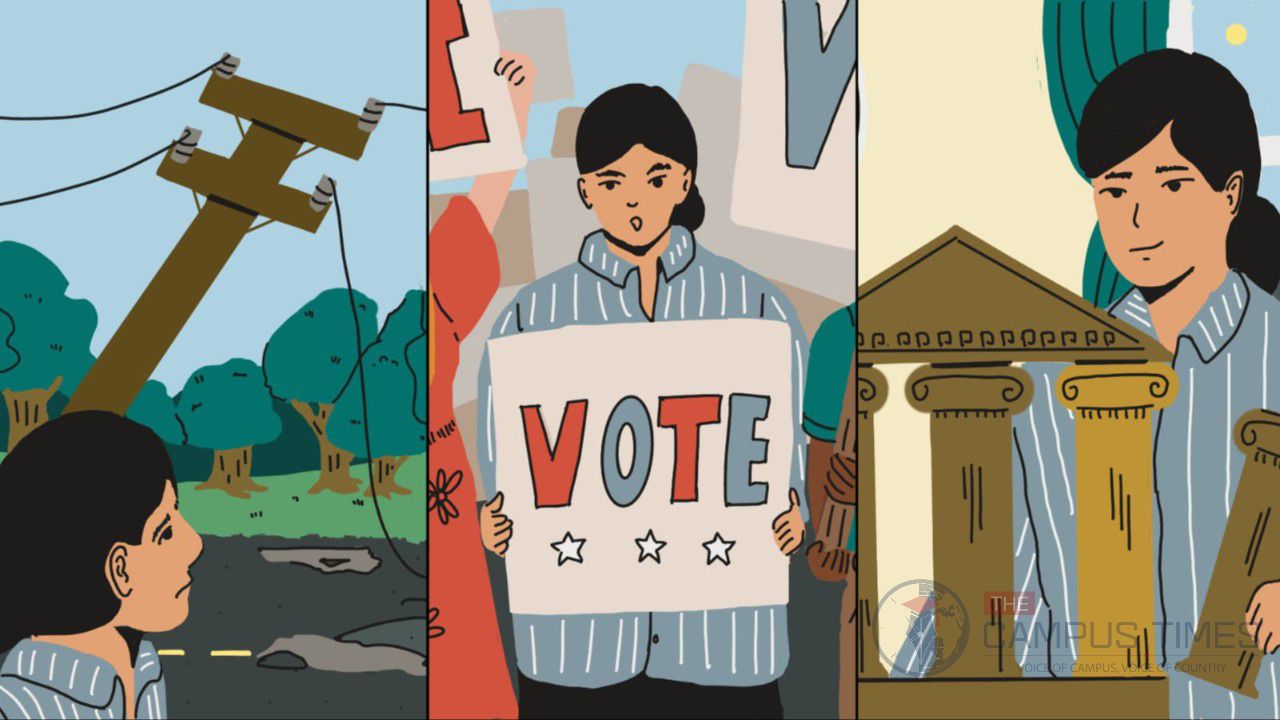


The day after an election is when democracy faces its biggest and most honest test. The campaign banners come down, political speeches fade from television screens, and the heated debates at local tea stalls lose their urgency. Life returns to its usual routine. For many, this marks the end of their civic role. They cast their votes, fulfilled what they believed was their sole duty, and stepped away from public life until the next election cycle.
But democracy does not pause when the ballot boxes are closed. In fact, its most demanding work begins the moment the excitement fades.
For too long, we have treated democracy as a moment rather than a continuous process. We celebrate high voter turnouts, debate which party won or lost, and analyze political shifts. Yet we rarely ask the most fundamental question: What kind of citizens are we between elections?
This question matters because no country can survive on elections alone. A vote gives people the authority to choose leaders, but it cannot repair failing schools, clean polluted rivers, manage local infrastructure, or rebuild communities after a devastating cyclone. Elections alone cannot eliminate corruption or restore trust in public institutions. These challenges demand a society of citizens who stay engaged long after election day.
Redefining Active Citizenship
We often overcomplicate the concept of "active citizenship," treating it as something reserved for politicians, activists, or high-profile public figures. In reality, democracy is built long before policies are drafted or votes are counted. It is built in classrooms, neighborhoods, and local communities where ordinary people make daily choices.
Active citizenship simply means caring about what happens beyond our personal lives. It is the willingness to look at a community problem and ask, "What can I do to help?" rather than waiting for someone else to fix it.
Sometimes the answer is as simple as mentoring a younger student, organizing a local clean-up campaign, reporting broken public infrastructure, or donating blood during emergency shortages. These actions rarely make national headlines, yet they form the invisible structure that holds a society together.
When people participate in community life and work together despite their differences, democratic values become a shared habit rather than an abstract concept discussed only during election seasons. Lessons from the Ground
Bangladesh offers powerful examples of this reality. Whenever emergencies strike, citizens especially young people step forward long before formal aid systems arrive.
During severe natural disasters, such as the catastrophic floods in Feni and Sylhet, thousands of students and local volunteers mobilized without waiting for instructions. Centers like Dhaka University’s TSC transformed overnight into hubs of continuous logistics and emergency relief. Young volunteers collected supplies, sorted medical aid, packaged food in the rain, and traveled directly into flooded villages to reach isolated families.
Similar dedication was visible on city streets when youth stepped up to direct traffic and maintain order during systemic disruptions. These efforts extend into daily life through youth-led blood donation networks, local literacy programs, and environmental drives across neighborhoods.
We rarely describe these actions as "democratic participation." Yet they represent democracy’s deepest principle: citizens taking direct responsibility for their collective well-being.
The Digital Frontier and Public Responsibility
In the digital age, active citizenship extends beyond physical communities into online spaces. Smartphones and social platforms give everyone the power to shape public opinions instantly. This connectivity offers remarkable tools for awareness and mutual support, but it also carries significant risks.
Online spaces are frequently flooded with unverified news, emotional manipulation, and hostility that deepens social division. In this environment, democratic participation requires judgment and discipline.
Before sharing a post or reacting to controversial news, a responsible citizen asks: Is this accurate? Does my response contribute to a solution, or does it fuel division? Protecting the truth in an era of rapid misinformation is just as vital to a healthy democracy as casting a ballot. Freedom of expression thrives only when paired with the responsibility to use that freedom wisely.
Ownership Beyond the Ballot
It is easy to grow cynical and believe that individual action is too small to make a difference, or that meaningful change only comes from political headquarters. History suggests otherwise. Almost every major movement for social improvement began with ordinary individuals who refused to remain indifferent.
A single community initiative can inspire neighboring areas. A thoughtful conversation can reduce deep-seated hostility. A local volunteer effort can highlight an issue that eventually influences national policy. Ultimately, active citizenship is not about political perfection or agreeing on every issue. It is about recognizing that a country belongs to its people every single day, not just on election day. The ballot is where democracy begins, but the everyday choices of ordinary citizens determine where it goes.
About the author
Sumaiya Binte Sarwar
Student, Department of Sociology,University of Dhaka